
Balanced Meals for Strength Training: A Practical Guide
By Michael Hrna, Director of Fitness at MaxxFIT
A balanced meal for strength training can start with ordinary foods: a protein source, a carbohydrate source, vegetables or fruit, and some fat. The useful question is how to turn those ingredients into meals you can repeat on a busy day.
Whether you train after work in Universal City or fit a session around family commitments in Katy, use the examples below as meal-building ideas. Portions should fit your needs, preferences and training—not a photo or another member’s plate.
What belongs in a balanced training meal?
Protein supports muscle maintenance and repair. Carbohydrates help supply exercise fuel. The NIH Office of Dietary Supplements emphasizes adequate overall energy, fluids, carbohydrate, protein, fat, vitamins and minerals for athletic performance.
For everyday meal composition, Harvard’s Healthy Eating Plate provides a useful visual starting point: vegetables and fruit, whole grains, protein foods and healthy plant oils. Its proportions are a general guide, not a personalized calorie prescription.
Choose a protein: chicken, fish, eggs, tofu, beans or plain yogurt.
Add a carbohydrate: rice, oats, potatoes, whole-grain bread or pasta.
Include produce: pick vegetables or fruit you enjoy and will actually use.
Include some fat: olive oil, avocado, nuts or seeds can be part of the meal.
Foods overlap categories. Beans provide carbohydrate and protein; nuts provide fat and some protein. You do not need to make every ingredient fit a single box.
Three meals you can assemble without a special menu
These are illustrative combinations, not individualized meal plans. Swap ingredients for your allergies, dietary needs, budget and preferences.
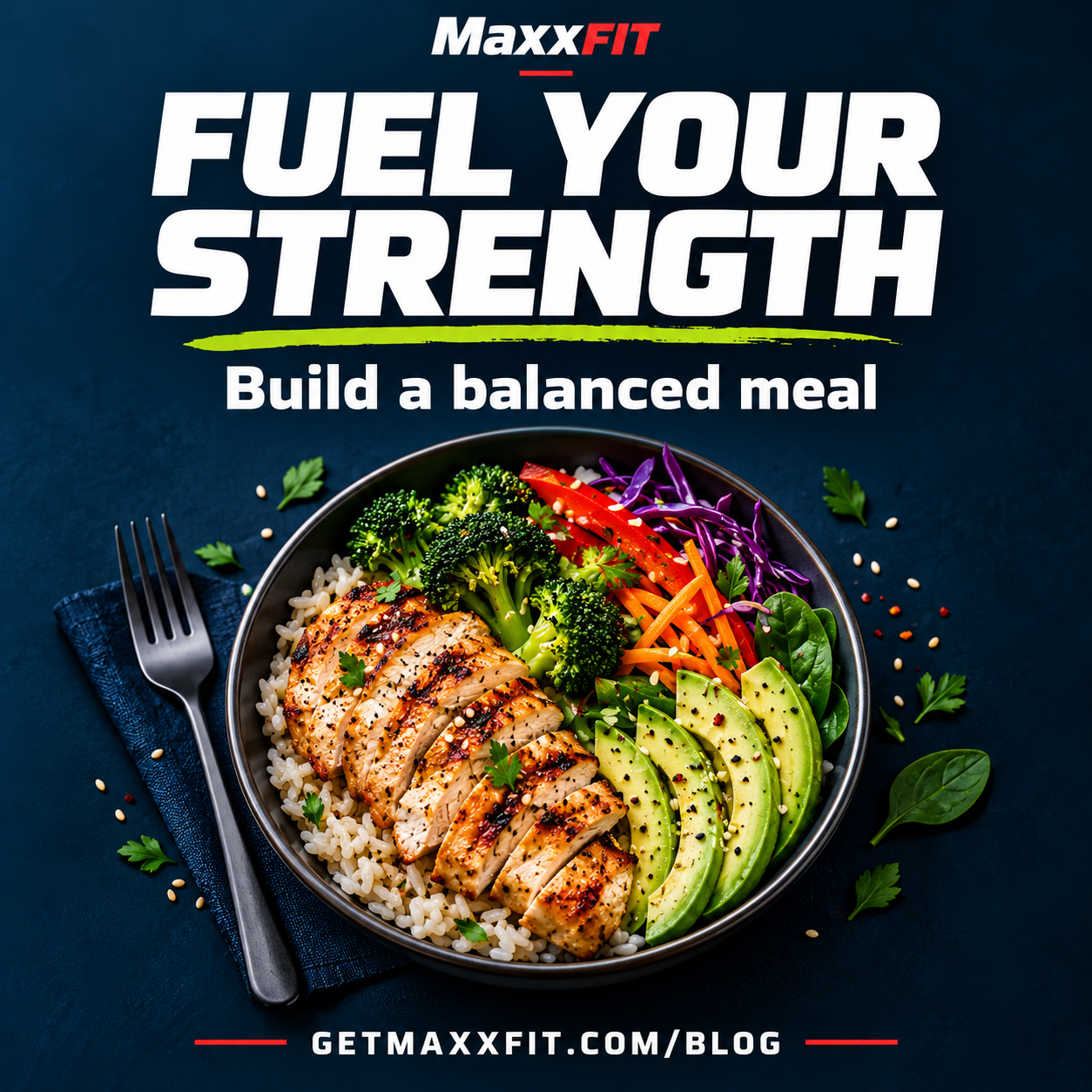
Workday lunch bowl: Combine rice, chicken or tofu, roasted peppers and broccoli, then add avocado or an olive-oil dressing. Keep the components separate if family members want different combinations.
Quick breakfast: Pair plain yogurt with oats, berries and nuts. If dairy does not suit you, choose an alternative that meets your needs and check its label; plant-based alternatives can differ considerably in protein content.
Family taco dinner: Set out tortillas, beans, chicken or tofu, shredded cabbage, salsa and avocado. Everyone can assemble their own plate. Use the same ingredients in a bowl for tomorrow’s lunch.
Pick one example to repeat this week. Write down the ingredients before shopping, and choose a backup meal for the evening when cooking falls through.
How much should you eat?
There is no single plate size or calorie target that suits every adult who lifts weights. Body size, activity, goals and medical needs matter. A harder training week may require a different approach from a quiet week.
Before changing everything, note what you ate, roughly when you trained and how the session felt. Bring that context to a discussion with your coach. For personalized portions, nutrient targets or a medical nutrition plan, work with a registered dietitian.
Do you need a protein shake?
A shake can be convenient, but it is not a requirement for starting strength training. NIH notes that many athletes can meet their protein needs through food and that performance supplements cannot replace a nutritious diet. If you are considering a supplement, discuss its suitability with a qualified healthcare professional, especially if you take medication or have a medical condition.
Put the meal plan beside your training plan
Choose your next training day and decide which meal needs the most help. A packed lunch, a planned dinner or a reliable breakfast gives you a concrete place to start.
Explore MaxxFIT adult training options, or see the Katy location page if you are planning training near Woodcreek Bend Lane. Your food routine and training schedule should be practical enough to repeat.
Want help choosing a training starting point? Email info@getmaxxfit.com to request a consultation. Include your goals, preferred location and weekly availability. We can discuss training options; individualized nutrition care belongs with a registered dietitian or clinician.
Sources and further reading
Harvard T.H. Chan School of Public Health: Healthy Eating Plate
NIH Office of Dietary Supplements: Exercise and Athletic Performance—Consumer Fact Sheet
NIH Office of Dietary Supplements: Exercise and Athletic Performance—Health Professional Fact Sheet
Sources checked October 2, 2026. General educational information for adults.